


Almost no method of treating osteochondrosis is used without visiting a massage room and a physiotherapy room.However, exercise therapy is usually indicated during remission.You can exercise at home.The main thing is that you know what exercises you can do and that you do them correctly.Otherwise, the condition can only worsen.A series of exercises should be recommended by a doctor.Through exercise therapy, the neck muscles are strengthened and the spine can perform its supporting functions more easily.Classes must be regular.And to prevent the disease, it is recommended to do small physical exercises even while working to warm up stiff muscles.

Massages help relieve pain and muscle spasms and reduce swelling.Blood circulation is significantly improved and the nutritional quality of the intervertebral discs is thereby increased.It would also be a good idea to attend manual therapy sessions.The main thing is to choose a good specialist.
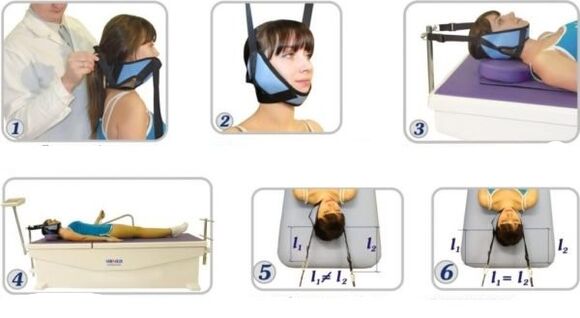
Causes of the disease
Osteochondrosis of the cervical spine occurs for several reasons:
- Genetic predisposition.
- Sedentary lifestyle.
- Metabolic disorders, also as a result of a hormonal imbalance.
- Increased emotional and physical stress.
- Muscle weakness, general weakening of the body.
- Obesity.
- Poor posture, curvature, vertebral injuries.
- Hypothermia, infectious diseases.
- Age-related changes in cartilage tissue.
- Autoimmune diseases such as rheumatism, systemic lupus erythematosus.
In athletes, the onset of the disease is often triggered by incorrect, irregular training.This leads to muscle tension, which leads to disturbances in posture and blood flow to organs and systems.Muscle spasms destroy the cartilage tissue of the vertebrae, reducing the distance between them and compressing the nerve roots.
Osteochondrosis of the neck may occur in women, which does not occur in men.We are talking about a disease that occurs during pregnancy.As the fetus grows, the curvature of the lumbar spine decreases.If the muscle corset is weakened, the cartilage tissue is damaged, minerals and vitamins are missing and intervertebral discs become entrapped.Proper nutrition, timely diagnosis and treatment of spinal problems and chronic diseases help prevent problems in the cervical and lumbar spine.
Treatment of cervical osteochondrosis by swimming
Treatment of cervical osteochondrosis by swimming is a relatively new method that has been used for 10-15 years.The essence of this therapy is as follows:
- the therapist examines the patient and prescribes exercises in water;
- under the supervision of a medical instructor, the patient performs a series of water exercises;
- If necessary, additional items such as neck braces or weights can be used.The latter is attached to the legs and allows the spine to be extended, avoiding pinched nerves.
This procedure is considered one of the most effective today.Many stages of osteochondrosis could be cured without surgery.
The main criterion for such treatment is the presence of a highly qualified doctor who can accurately diagnose the extent of the disease, identify complications and prescribe a number of procedures.The entire process must take place under the supervision of an instructor.
In addition to the main task of getting rid of pinched nerves in the neck, swimming also serves two other functions.During exercise, muscle tone increases, which improves the patient's general well-being and activates blood circulation, which also contributes to healing.
Examination for osteochondrosis
The examination for osteochondrosis is carried out comprehensively and includes:
- Interview and examination of the patient;
- general and biochemical blood tests;
- Computed tomography, which allows you to examine the structure of the vertebrae and intervertebral discs and identify existing anomalies;
- magnetic resonance imaging, which reveals damage to nerve endings, ligaments and cartilage tissue (diagnosis time is about 40 minutes);
- Radiography (images in two projections), which allows us to detect changes in the structure of the spine, the presence of bone growths on the vertebral body and atrophy of the intervertebral discs.
Treatment of cervical osteochondrosis is carried out by a neurologist and the local therapist refers him to him.You should seek help when the first signs of the disease appear, including:
- Pain that increases when bending and turning the head;
- a feeling of tension and rapid muscle fatigue.
As a preventive measure, examinations can be carried out every five years.If osteochondrosis is detected, it must be treated.
Folk remedies
Traditional recipes will help you cure cervical osteochondrosis at home.They are safe and no less effective than medications.However, it is recommended to use folk remedies as an adjunct to the main therapy.In the early stages they contribute to complete recovery, but in the later stages of the development of the disease they can only reduce the manifestation of symptoms.
An effective remedy can be made from pine buds.They should be picked up before May.They should not be longer than 2 cm.Cut the kidneys into circles and carefully place them in a deep glass plate.Sprinkle with sugar.For 1 part of buds you need 2 parts of sand.Let the product steep for 2 weeks.During this time it will turn golden brown.Take 5 ml three times a day.You cannot swallow the product immediately: you must keep it on your tongue for a few minutes.Take the medicine for up to 3 weeks, but the pain disappears after 2 days.
The coltsfoot appears by rubbing against the osteochondrosis of the cervical spine.You need to pour 300 ml of alcohol over 20 g of inflorescences, leaves and stems.Mix everything thoroughly and wait a month for the product to steep in a dark, cool place.Then filter.Use the medicine to rub sore spots.
Horseradish can also be rubbed in well.First grate the horseradish and squeeze out the juice.Then pour it into a glass container and add the same amount of alcohol.Apply the resulting medicine to the affected areas of the neck and back.Do not apply the product to areas near lymph nodes.
Elderberry is also good as a liniment.For every 100 g of product you will need 500 ml of alcohol or vodka.Store the product in a dark place for a week to infuse, then strain and use.
Radish also helps.It is used for compresses.Grind the fruits on a grater, then spread the resulting mass over two thin layers of fabric.Then attach the bandage to the sore spot on the neck and secure it with foil.Keep the compress as long as possible.
You can also make a compress from comfrey root.It needs to be rubbed.Then add 50 g of sour cream (choose only sour cream).Pour the resulting mass onto a cloth and apply to the sore spot for 40 minutes.Repeat the process for 10 days.
Sunflower can be used to make an oil that is used to relieve salt buildup in the joints.A decoction is prepared from the roots of this plant.They need to be washed, dried and cut.Then add 150 g of product to 3 liters of water.Boil the medicine for half an hour.Usually this amount is enough for 3 days, so a new decoction must be prepared in advance.Take it half an hour after meals.The therapy lasts one month.
Another useful decoction is prepared from dandelion.Use his spine.The latter should be washed, dried and cut.Add 15 g of product to 250 ml of boiling water and process in a water bath for 20 minutes.Then wait another hour for the medicine to infuse.Then strain and add a small amount of boiling water to replenish the liquid volume.Take a cup of the decoction three times a day before meals.It also helps remove salts from the human body.
Ginger can be used to make an ointment that relieves pain.You need 55 g of root.There is no need to peel it - just grind it with a grater.Then add 3 cloves of garlic and 30g butter (just butter - it should be very soft).To eliminate unpleasant odors, you can add aromatic oil.
What is contraindicated for osteochondrosis?
If osteochondrosis has already occurred, nothing can be done about it.Bones and cartilage do not grow back.However, it is quite possible to prevent the development of the disease and relieve pain.To do this, you need to follow a few simple rules about what not to do with osteochondrosis.
- If you suffer from osteochondrosis, you should not lift or carry heavy objects.If this is unavoidable, then do it only with your back straight, without tilting your head forward.
- Get rid of the habit of crunching the joints and vertebrae of the lumbar and cervical spine.With osteochondrosis, this is not possible, since such movements lead to additional wear on the contact surfaces of the spine, gradually compromising their integrity and aggravating the disease.
- If you suffer from cervical osteochondrosis, you should not sleep on a bed that is too soft and a high pillow.This leads to involuntary tension in the back muscles and increased pain, and if the back remains curved, additional deformation of the spine occurs.
- Physical activity and nutrition.With osteochondrosis, you cannot lead a stationary lifestyle;You have to move more.Walking, jogging and swimming are very helpful.You can't eat too much.You need to quickly get rid of excess weight and include foods in your diet that contain a lot of vitamins and calcium.For osteochondrosis, cottage cheese, milk, fruits and vegetables are suitable.
- Under no circumstances should you self-diagnose or self-medicate for osteochondrosis.Only a qualified doctor can make a correct diagnosis and recommend treatment and prevention procedures.You cannot give yourself different injections.People react differently to each type of injection.To avoid anaphylactic shock, all of these procedures should be performed by a doctor.In addition, each spinal disease with osteochondrosis has its own treatment method.
Treatment
Only with the help of doctors can you get rid of the disease forever.After the examination, the patient is prescribed an appropriate method of therapy.If basic treatment methods are ineffective, surgical intervention is required.
Conservative treatment

This also includes drug treatment.Doctors prescribe the patient medications whose effect is aimed at relieving muscle tension.In most cases these are non-steroidal drugs with anti-inflammatory effects and analgesics.
Taking B vitamins as well as taking external medications can be helpful.Gels can warm the muscles, relieving cramps and tension.To accelerate tissue recovery, chondoprotectors are prescribed.
Manual therapy
Massage for osteochondrosis of the cervical spine is very effective.With its help, you can achieve muscle relaxation, restore blood circulation and relieve pain.The massage must be carried out very carefully.You cannot use a lot of force, you can only make slow and gentle movements, touching the body only with your fingers.You can do self-massage at home.
Therapeutic gymnastics
Exercise strengthens the patient's muscles and improves blood circulation, thereby relieving neck pain.Doctors recommend the following exercises:
- Tilts head forward and back.It is necessary to slowly tilt your head forward, touching your chin to your chest, and then tilt it back.
- Tilting the head to the side.You need to slowly tilt your head and switch sides.
- Head spins.As you do this, slowly turn your head towards your shoulder until your chin turns red.Carried out in both directions.
- Shoulder rotations and lifting the shoulders towards the ears.These supportive exercises improve blood circulation in the neck.
Exercise will help you get rid of the disease faster without the need for hospital treatment.Exercises are performed at home for treatment and prevention.
Other treatments
Acupuncture is practiced for osteochondrosis of the cervical spine.Needles are inserted into bioactive points near the vertebrae.This procedure effectively relieves tissue inflammation and relieves the symptoms of pinched nerves.Acupuncture also improves metabolism and restores blood circulation.
A promising method is the treatment of osteochondrosis with leeches.Their use improves blood circulation, stabilizes blood pressure and accelerates the recovery of vertebrae and intervertebral discs.
A modern method is shock wave therapy.Its essence lies in the effect of low-frequency sound waves on the patient.These waves are partially reflected by the tissue, creating a massage effect.Using the method has a positive effect on metabolism and blood circulation.
Traditional medicine
To relieve pain, the neck is warmed with mustard plasters.They should not be used for too long.A vodka compress is also used.It contains 500 ml of vodka, 1 g of propolis and 50 g of aloe.
Sunflower root tea helps remove salts and restore tissue.The recipe for its preparation is simple: take 1 tbsp for 3 liters of water.chopped root.
The following methods are also popular:
- Horseradish leaf tied to the neck overnight;
- clay compress;
- Using honey for massage;
- various tinctures.
Degree of disease development
Cervical osteochondrosis, like osteochondrosis of other parts of the spine, develops gradually.There are 3 stages of disease development.
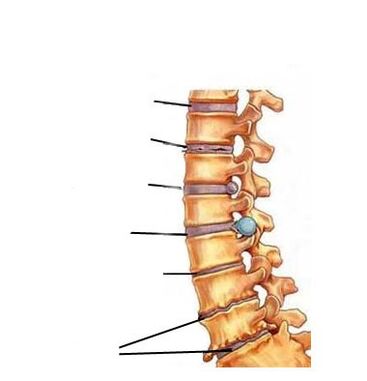
1st degree
Characterized by the beginning of the destruction of the intervertebral discs.
A characteristic aching pain occurs.Sometimes such pain is absent in stage 1 (preclinical) and osteochondrosis occurs with moderate discomfort in the neck area.
2nd degree
If grade 1 osteochondrosis has not been treated or the treatment has not been effective, this is a chronic disease that is grade 2 osteochondrosis.
With cervical osteochondrosis, falling head syndrome can develop at this stage.This syndrome is characterized by severe pain and the person is forced to support their head in a fixed position to relieve the pain.
3rd degree
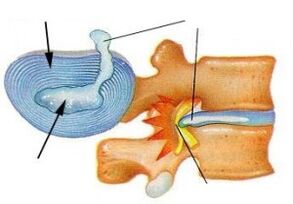
Grade 3 cervical osteochondrosis is accompanied by the following symptoms:
- Headache;
- nausea;
- Dizziness;
- “Lumbago” on the neck;
- limited sensitivity of the upper extremities.
The fibrous ring is almost destroyed, which leads to complications of osteochondrosis - bulging of the intervertebral disc or intervertebral hernia.
Symptoms and possible complications
Cervical osteochondrosis can initially develop asymptomatically.Or neck discomfort and other signs are attributed to other illnesses, fatigue, stress or atmospheric conditions.
However, if several symptoms are present at the same time, this should be a reason for immediate consultation with a doctor:
- Pain in the neck that eventually spreads to the head, face, shoulders, shoulder blades and arms.When turning your head or in a certain position, the pain may disappear or increase.
- Crunch in the neck, limited mobility.
- Dizziness, fainting.
- Nausea, vomiting.
- Impaired motor skills, coordination of movements, tremors in the hands.
- Impaired sensitivity in the face, limbs or, conversely, the appearance of unusual sensations - goosebumps, tingling.
- Problems with the functioning of the organs of vision, hearing and speech.
- The occurrence of high blood pressure or increased intracranial pressure without an objective cause from the cardiovascular system.
The appearance of these symptoms is directly related to the degenerative processes themselves in the cervical spine.And even with stenosis of the vertebral artery and compression of the nerve tissue, these structures enter the spinal canal and are damaged by the vertebrae.
If the disease is not treated, sooner or later dangerous complications will arise.First, the patient loses the ability to move freely - this is a disability, a permanent loss of the ability to work.Secondly, the progression of the pathology impairs the functioning of the brain, which can lead to injury from a fall, stroke, coma or death.
What you can do yourself at home
Treatment of cervical osteochondrosis at home is a requirement that most doctors insist on.It is impossible to manage the disease with medication and physical interventions alone;They only temporarily eliminate the symptoms.Regular, measured physical activity, the use of self-massage techniques, therapeutic compresses and strengthening infusions can extend the duration of remission.
By strictly following the instructions and medical recommendations, you can achieve impressive results.Carrying out self-massage saves significant money;Using decoctions and herbal teas instead of certain medications reduces the negative effects of medications on the body.

At home, you can make compresses and lotions, massage your neck and, if necessary, wear a shants fixation collar (splint).
Home therapy, like traditional treatment, helps to quickly relieve pain, normalize cerebral circulation and improve sleep.With the help of available products, you can eliminate nervousness and irritability, stabilize blood pressure and restore normal sensitivity in the cervical collar area.
How to get rid of osteochondrosis
This disease can have various causes, including:
A chiropractor must have three diplomas:
Exercise to stretch the neck muscles.It is carried out in three steps while sitting on a mat with your legs stretched.Hands clasped behind head, elbows open.The first forward bend is performed with your back completely straight.Perform a second bend and try to reach your legs with your elbows.The third incline is performed with your back straight.Repeat 10 times.
Contraindications to exercises:
A person may experience tinnitus, gait disturbances (“cerebellar duct”), interruptions in heart rate, and numbness in the fingers.When such alarming symptoms appear, it is necessary to eliminate cervical osteochondrosis as early as possible.
The most effective are therapeutic exercises to strengthen the muscle corset, as well as adherence to a diet and other preventive measures.
In order to no longer ask the question of whether cervical osteochondrosis is treatable, it is important to always sit correctly, sleep on a hard bed and maintain posture.Don't give up physical education once the pain goes away.
Fighting exacerbations is a daily attempt to improve.After all, with a disease such as cervical-thoracic osteochondrosis, treatment cannot be stopped.Only with the right approach you will forget about pain and relapses for many years.
Exercise therapy is also a good prevention of osteochondrosis.Regular exercise improves blood circulation and relieves tension in the spine.
Massage for osteochondrosis.
Cervical osteochondrosis
At home, patients are prescribed therapeutic exercises.A simple set of exercises does not require much time and with daily training you can significantly improve your fitness.
Today there are still no medications specifically designed to treat this disease.However, we should not forget about drugs that can reduce inflammation and relieve pain, normalize metabolism and even contribute to some extent to the restoration of cartilage tissue.Let's take a closer look at the groups of drugs in the fight against osteochondrosis:
Metabolic and hormonal system disorders and the resulting diseases (e.g. diabetes mellitus, Cushing's disease, hypothyroidism and hyperthyroidism), which lead to a failure of metabolic processes in the body.
Breast osteochondrosis
Lying on your stomach, emphasis on your hands.The hands should be slightly further away than the shoulders.Lower your forehead to the floor and try to touch your ears with your shoulders.The second stage is to gently lift your head while trying to pull your shoulders down.The chin should be pulled forward, the gaze should be directed downwards.The third stage – slowly return to the starting position, relax your shoulders.
There is a specific treatment algorithm.Treatment of neurological manifestations of spinal osteochondrosis includes:
Medication for treatment
However, remember that therapeutic exercises must be composed correctly and without excessive stress.Otherwise, the patient will only receive complications instead of the desired relief.
Prohibited actions
Severe pain in the neck is a good reason for medical consultation and a comprehensive examination.Only after an accurate diagnosis has been made, treatment tactics and the most effective methods in each individual case are determined.
It is strictly forbidden to relieve pain in any way - for example, try to straighten a displaced vertebra yourself or seek similar help from a friend who is not a specialist.You should not take painkillers in large doses uncontrollably.Even folk remedies can cause harm if the diagnosis is not yet known.
To cure osteochondrosis, you need drugs from different groups that have a comprehensive effect on the disease.
The correct motor mode is very important: If movements are to be restricted as much as possible in the acute stage, physical activity must be increased after a few days.Performing exercises from the exercise therapy complex helps to improve blood circulation, reduce pain intensity and relieve the inflammatory process.In addition, correctly selected exercises help strengthen the muscular corset that supports the spine.
How to cure osteochondrosis forever
Complex drug treatment consists of drugs from several groups:
- NSAIDs and analgesics during exacerbations;
- muscle relaxants for muscle relaxation, including tizanidine, tolperisone hydrochloride;
- Chondroprotectors that restore the cartilage tissue of the intervertebral discs.It can be sodium chondroitin sulfate;
- Vitamin-mineral complexes with B vitamins.
Various ointments, gels and plasters effectively complement the treatment.Today, pharmacies have a wide range of local remedies that can be used both in exacerbations and in the recovery period:
- anti-inflammatory;
- chondroprotective – chondroitin sulfate;
- homeopathic.
After the acute symptoms have subsided, warming agents can be used.