


According to statistics, back pain worries almost every second person on earth over the age of 18.They can have various causes.In this article we will learn about one of the most common causes: osteochondrosis of the lumbar spine.It is possible to fight and even successfully win this disease if you start it in the early stages.
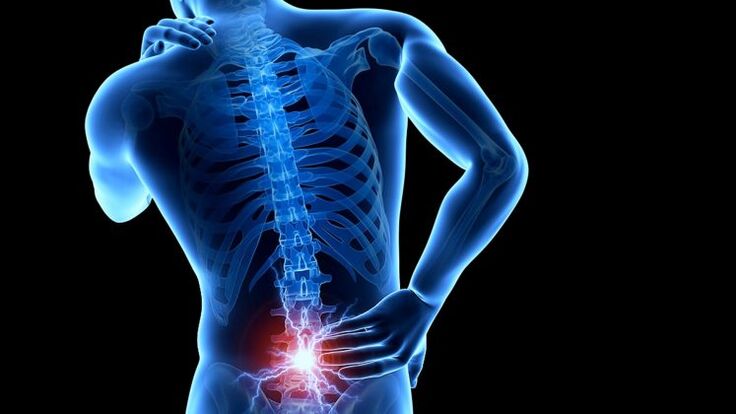
It's time to sound the alarm
If you want to successfully cope with a disease such as lumbar osteochondrosis, you should not expect that obvious symptoms will appear immediately.In the first stage you will not feel them.
It is important to know that people who spend a lot of time sitting or standing in the same position are more susceptible to danger.If, due to circumstances or other reasons, this has been the case for many years, there may be a reason to check the condition of your spine, even if the symptoms of the disease are not visible.
You should not ignore the following “alarm bells”, which may indicate that lumbar osteochondrosis has already progressed beyond the first stage.
- Lower back pain.They initially only appear under above-average load and disappear when at rest.Or after a long stay in an uncomfortable static position.Over time, such pain bothers me constantly, on long walks.
- Gradually the pain becomes chronic and can manifest itself as aching, tingling (related to the thigh), acute pain, lumbago, etc.Feeling hot or cold in the lower back.
- Dynamically developing pain that intensifies.Part of the leg becomes numb or a tingling sensation occurs.
- Symptoms such as: constipation, urinary incontinence, numbness between the legs, menstrual irregularities (in women).
- The feet become cold for no apparent reason, the skin on the feet peels off.
- The spine begins to bend, the back muscles in the lower back are unnaturally tense, and it is difficult to bend completely.
- Unbearable pain.
All of these symptoms cannot be ignored, especially if they occur at the same time and their approximate order is the same as that described above.
Complete the required exam
The doctor you see will order certain examinations and various tests.This is because identifying this disease is not that easy.Many laboratory tests are aimed at ruling out possible other diseases (e.g. diseases of the internal organs) that have the same symptoms.The best way to determine the cause is MRI – magnetic resonance imaging (possibly even with paramagnetic amplification).But radiography is also used.
Is the important phase of making an accurate diagnosis now behind us?What choice do you have between the different treatments?
Methods of influencing the affected spine
Osteochondrosis of the lumbar spine is currently treated in a variety of ways.However, they can all be divided into two large groups: symptomatic (eliminates pain and other consequences of the disease) and pathogenetic (it is considered that it acts on the cause, eliminates it or prevents its development).
Treatment with pain-relieving medications.Such medications are prescribed only by the attending physician.The treatment is symptomatic, that is, the person is happy that everything is back to its previous healthy state, can stop caring for the back and in the meantime the disease progresses without symptoms until the pain manifests itself in a more severe form.
Muscle relaxants are medications that help relieve muscle spasms that result from disc destruction.Therefore, this treatment is a symptomatic treatment.
Physiotherapeutic effect.This includes a wide range of methods that affect lumbar osteochondrosis through the skin.This treatment:
- high frequency current;
- Laser;
- Magnets.
Different spinal extensions: in water or with hardware.Caution should be exercised when using this method if lumbar osteochondrosis is already in a progressive stage.
The homeosiniatric method is a treatment in which homeomedicines are administered specifically to the affected area (or a specific active point in the body) to help the body eliminate toxins.
Hirudotherapy (treatment with leeches).They are an invaluable help and help many patients forget about the disease for many years.Leeches are believed to provide the body with hirudin, which helps improve blood circulation in the affected area, relieves pain and reduces inflammation.
Osteochondrosis of the lumbar spine, in the absence of bulges, herniated discs and other contraindications, some trust an experienced chiropractor - a massage therapist who works with the spine.
Special exercises to relieve pain in osteochondrosis.If you decide to engage in a series of such activities, it is best to consult a doctor.
Pathogenic method developed by specialists
I would particularly like to address interstitial stimulation with physiological current (VTES).Under the leadership of the professor, a new method of influence was developed that allows improving blood circulation in the bone of the vertebra itself.
It is believed that precisely due to the weakening of this blood flow, the nutrition of the intervertebral disc noticeably deteriorates, which leads to a gradual loss of its properties, the ability to function normally and ultimately to its destruction.
The essence of the method is to direct a physiological current to the affected vertebra, bypassing the skin - a natural insulator.The physiological current is a current identical to the current generated in our body and amplified many times over.It is delivered through a needle - an electrode, which is inserted to a certain depth (under the skin) at the site of pathology, that is, at a specific place on the back.The current powerfully stimulates the vessels inside the vertebral bones and thereby improves the nutrition of the intervertebral discs.
According to the results of studies (needle rheography, polyorheography), blood circulation in the bones, including the lumbar spine, improves dramatically.The intervertebral disc is completely restored (osteochondrosis in the early stages).
In later stages, lumbar osteochondrosis leads to symptoms such as severe, persistent back pain due to a bulging or herniated disc.Interestingly, treatment of VTES allows a dense, woven capsule to re-form around the hernia in a very short time, preventing its growth and even reducing its size.
Good tips for prevention
- Knowing that working for hours in a stationary position, especially at a computer, can be helpful.For example, take breaks every hour, do stretching exercises, and go for walks.Maintain correct posture.Some people are helped by specially made correctors, for example with neodymium magnets.
- Constant lifting of heavy weights also contributes to the development of the disease, so you need to know the rules for proper lifting.
- Avoid hypothermia and back injuries.Watch your weight, strengthen your back muscles through moderate exercise and swimming, then you won't need treatment.
- It is quite possible to overcome lumbar osteochondrosis if you start treatment in the early stages or keep it under control.